How Excessive Gaming Rewires the Teenage Mind
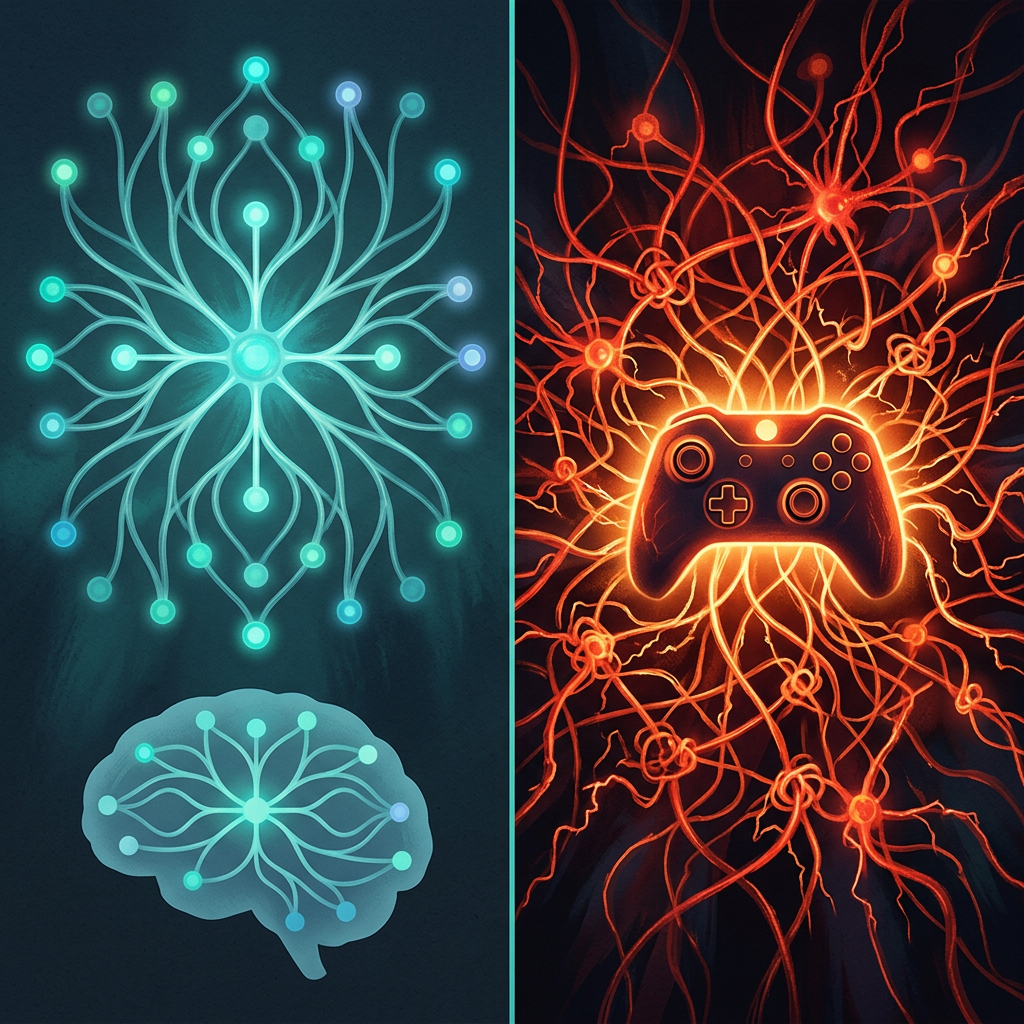
Heavy, compulsive gaming does not just eat up hours. It turns up the volume on the brain’s emotion and habit systems while quietly weakening the part that says “stop.”
Think of the brain as a car. The reward and emotion circuits are the accelerator. The prefrontal cortex, the region just behind your forehead, is the brake. In a healthy brain, both work together. With excessive gaming, the accelerator gets more sensitive and the brake pads wear thin.
This matters most for teenagers and young adults, whose brakes are still being installed. Here is what the science says, and what parents, educators and gamers themselves can do about it.
The healthy circuit: three partners and a reward engine
Three brain regions decide how we respond to anything exciting, and a fourth system fuels them. Some people loosely call the control region the “frontal receptive center”; the correct term is the prefrontal cortex (PFC).
- Amygdala, the emotional tagger. It stamps experiences with emotional weight: thrill, threat, frustration.
- Hippocampus, the context recorder. It stores where, when and how something felt. “This game, at this time of night, felt great.”
- Prefrontal cortex, the brake. It weighs consequences, holds back impulses and calms the amygdala down.
- The dopamine reward pathway. Neurons in the ventral tegmental area (VTA) release dopamine into the nucleus accumbens whenever something feels rewarding, or might be about to.
These regions talk to each other constantly. In a balanced brain, the PFC sits on top, applying the brake when emotion or a familiar cue pushes us toward something we will regret.
What heavy gaming changes
When play becomes compulsive, the World Health Organization recognizes it as a condition: Internet Gaming Disorder, coded 6C51 in ICD-11. Four shifts drive it.
1. The reward loop gets stronger. Games are built on variable rewards: loot drops, level-ups, surprise wins. Each unpredictable reward triggers a dopamine surge, and the brain learns to chase the next one. Over time, ordinary rewards like a good meal, a conversation or finishing homework start to feel flat by comparison.
2. The amygdala becomes hyper-reactive. Time away from the game brings irritability, anxiety and craving. This mirrors the cue-reactivity seen in substance addiction, where a mere reminder sets off a strong emotional pull.
3. The hippocampus builds powerful cue-memories. The phone on the table, the evening slump, a notification sound: each becomes a trigger that launches the urge automatically. Some imaging studies report changes in hippocampal volume, though the findings are mixed.
4. The prefrontal brake weakens. fMRI studies show reduced activity in the dorsolateral PFC and weaker connections between the PFC and the amygdala. In everyday terms: poorer impulse control, weaker planning and a harder time managing emotions.
The net effect: a loud accelerator, a quiet brake
The emotional and habit systems grow louder while the frontal brake grows quieter. The result shows up in daily life:
- Compulsive play that continues despite clear harm
- Mood swings and irritability when play is interrupted
- Lost sleep, often from late-night sessions
- Falling grades or slipping performance at work
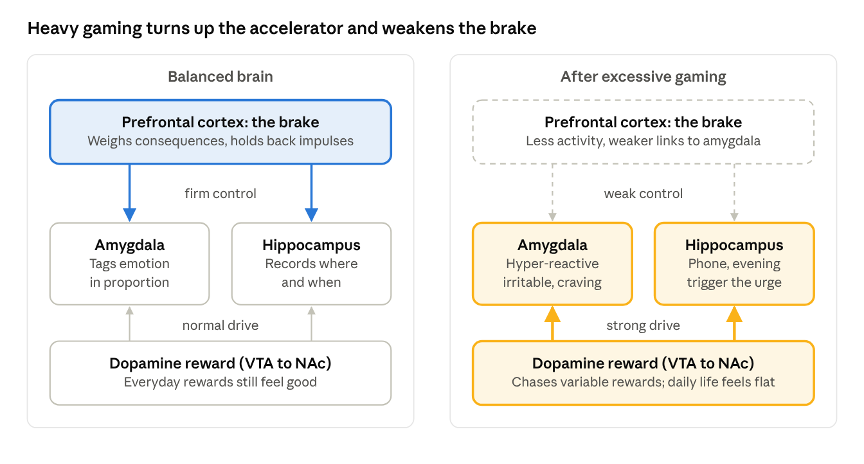
balanced brain vs. after excessive gaming
On the left, the prefrontal cortex keeps emotion and memory in check. On the right, reward and cue signals grow stronger while the brake fades.
Why teenagers are most vulnerable. The prefrontal cortex is the last part of the brain to mature, and it is not fully developed until about age 25. Adolescents already have a strong accelerator and an unfinished brake. Heavy gaming widens that gap at exactly the age when the brain is wiring its lifelong habits.
The good news: it is about dose, and it can be reversed
Gaming itself is not the villain. Moderate play has measurable benefits, including sharper visuospatial attention and faster reaction times.
The harmful brain changes are linked to compulsive, excessive use, not to an hour of play after homework. Even better, the evidence suggests these changes are at least partly reversible. Three things help most: cutting back on play, restoring healthy sleep, and cognitive behavioral therapy (CBT).
Rebuilding the brake: what families can do
Warning signs worth watching for
- Gaming crowds out sleep, meals, school or friendships
- Anger or anxiety when asked to stop
- Repeated failed attempts to cut back
- Lying about or hiding how much time is spent playing
Practical steps
- Break the cues. Keep consoles and phones out of the bedroom, and switch off game notifications.
- Protect sleep first. Set a firm screen-off time at least an hour before bed.
- Make limits visible and agreed. Decide gaming windows together rather than policing them minute by minute.
- Refill the reward tank. Sports, music, friends and outdoor time give the brain other sources of satisfaction.
- Seek help early. If the warning signs persist for months, a doctor or therapist trained in CBT can help.
The brain that learned to crave the next level can also learn to wait for it. With less play, better sleep and the right support, the brake can be rebuilt.


Leave a Reply